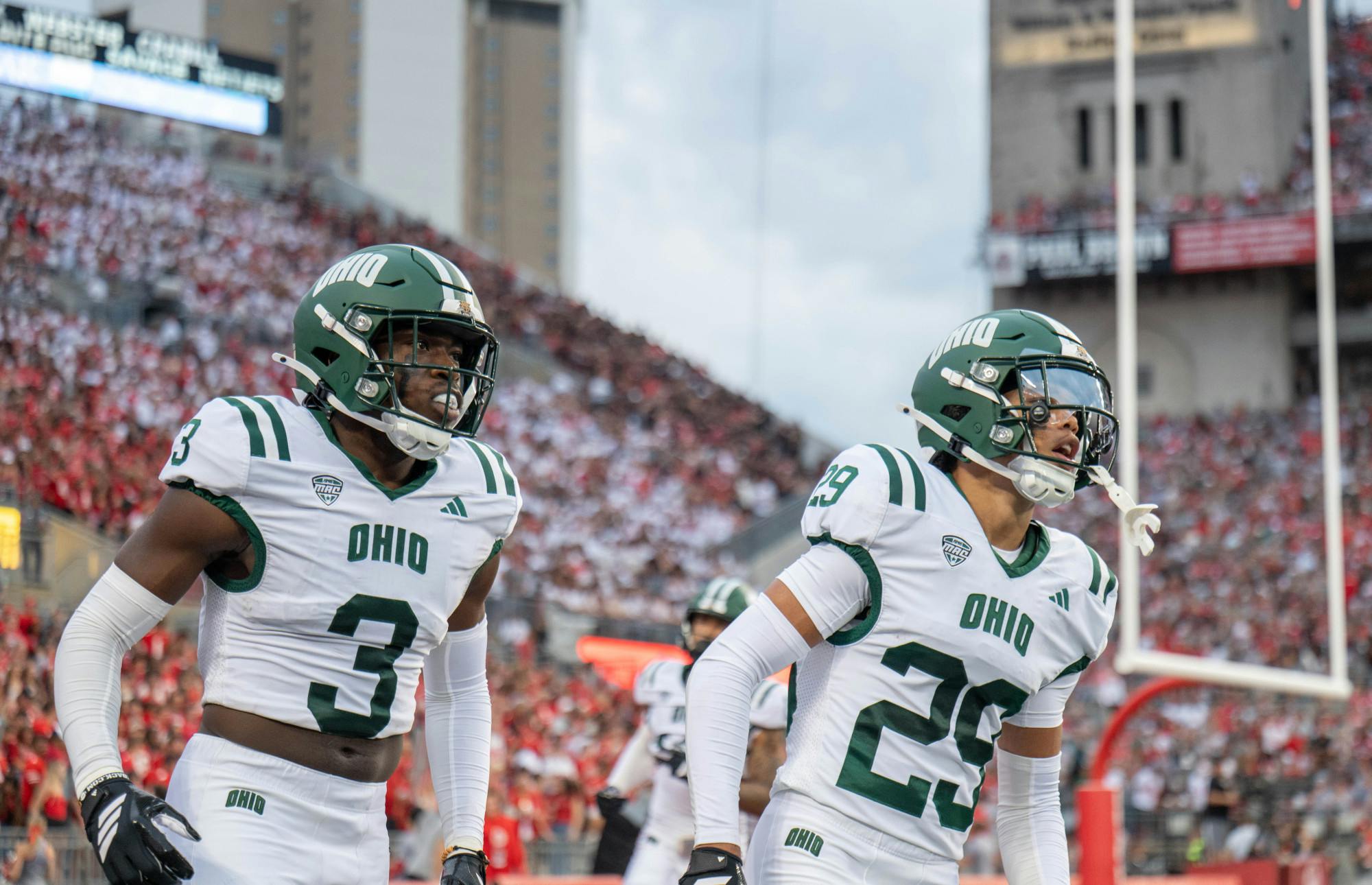
Ohio University is traveling to Lincoln this Saturday for its season opener against the Nebraska Cornhuskers of the Big Ten Conference. The game starts at noon.
The Bobcats head into the game as heavy underdogs, as the Cornhuskers are favored by 23.5 points. This is Ohio’s third straight season in which it opens on the road against a team that is part of a Power Four conference.
The Bobcats lost their past two season openers against Power Four teams, as they fell to Rutgers University (Big Ten) last season and Syracuse University (Atlantic Coast Conference) the season before, despite putting up great fights in both games.
Conversely, the Cornhuskers won both of their last two season openers by a combined 36 points against the University of Texas at San Antonio and the University of Cincinnati.
Quarterbacks
Both Ohio and Nebraska have a similar theme heading into the year, one that could make or break their seasons. Both teams have a new starting quarterback after quarterback competitions during the offseason.
Immediately after last season’s quarterback, Parker Navarro, left, talks of who would fill the spot started. Veteran quarterback Nick Poulos was chosen as the week one starter after sitting behind Navarro the past two seasons.
Nebraska’s star quarterback, Dylan Raiola, transferred to the University of Oregon at the end of last season. This sent the Cornhuskers into the same situation as the Bobcats.
Last season, when Raiola got hurt, Nebraska brought in backup quarterback TJ Lateef. In four games started, Lateef had a respectable performance of five passing touchdowns and one interception, while also throwing for 904 yards.
Despite Nebraska going 1-3 in those four games, Lateef was still the front-runner for the starting job. The Cornhuskers then brought in senior transfer Anthony Colandrea from UNLV. This meant Nebraska found itself in a quarterback battle between Colandrea and Lateef. Eventually, Colandrea was named the starter for week one against the Bobcats.
With two new starting quarterbacks, the game will focus on which quarterback fits better into their new respective systems. Poulos has an advantage because he was a backup for Ohio for two seasons. However, a possible disadvantage is that his first performance will be in a Big Ten stadium with 85,000 rowdy Cornhusker fans. Poulos will lean on his experience with big crowds against Kentucky and Ohio State to help handle the pressure.
As for Colandrea, he has more starting experience than Poulos, along with home-field advantage. This game will not solely be won by a quarterback. Both teams have other bright spots that help them win games.
Ohio’s Secondary vs. Nebraska’s Receiving Core
The Bobcats' defensive back room, led by DJ Walker, redshirt junior and team captain, is something Colandrea will have to look out for. Not only is Walker a phenomenal player, but he also has a lot of experience in intense, high-leverage moments on the road in big stadiums.
The defensive back room took a hit this offseason, but Ohio was able to bring in a few young transfers coming off great seasons. Walker’s veteran experience should be the glue this secondary needs to excel in an intense game.
As for Nebraska, its wide receiver room has been completely revamped, as it brought in two Big Ten transfers while also retaining one of its best receivers from last season. The Cornhuskers’ big three receivers this season combined for 135 receptions for 1,597 yards and 14 touchdowns in 2025.
Colandrea also being a gunslinging quarterback means that Walker and his secondary group are going to have their hands full trying to contain a very threatening Nebraska passing game.
This game will come down to Ohio limiting mistakes and capitalizing on mistakes made by the Cornhuskers. It will be a duel between two quarterbacks making their first starts for their respective teams.